
Skip to content

Complimentary shipping over $150 · 30-day returns

PurseCorner

Care

Look after it and it will outlast you

Nearly every fault we see could have been prevented in about five minutes a year. This is everything worth knowing, by material. Each product page also lists the care specific to that bag.

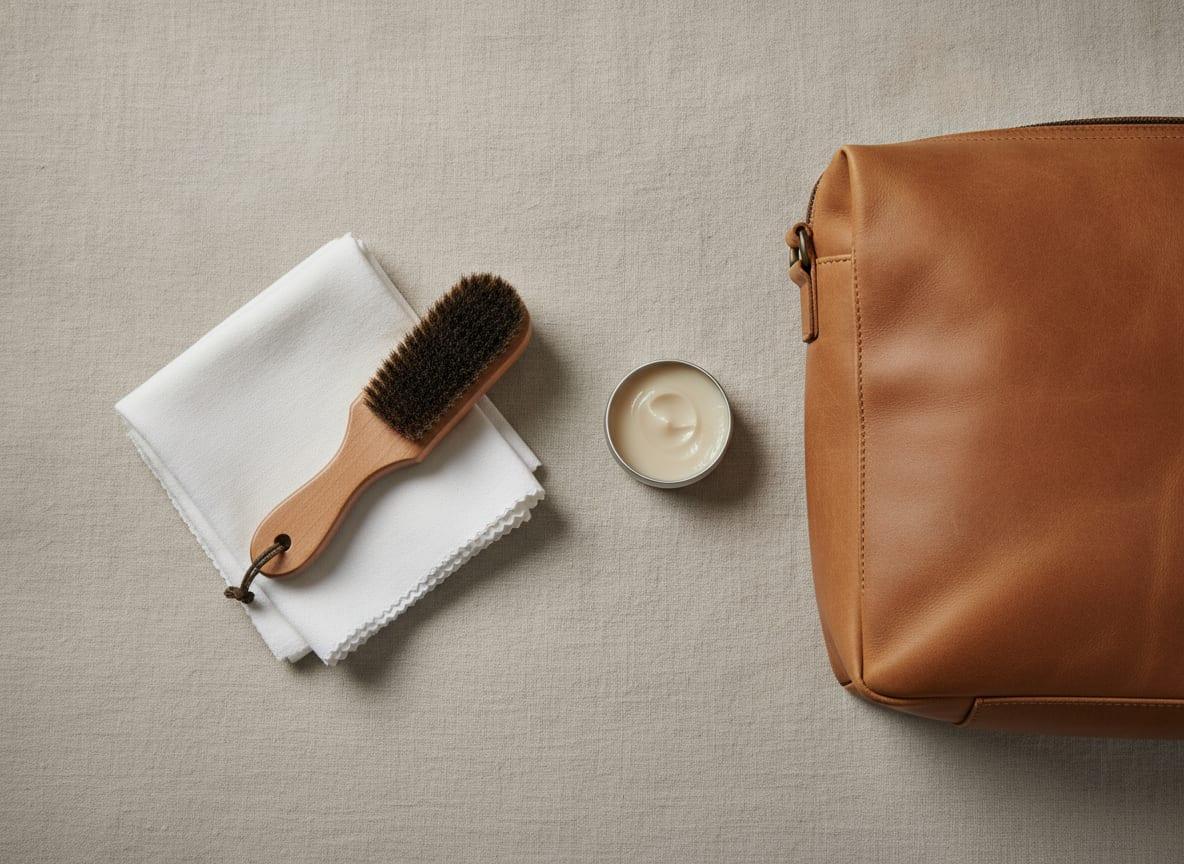
A cloth, brush and tin of leather cream beside a bag

Full-grain & pebbled leather

Every day

Wipe with a dry cloth after use.

  1. 01

    Blot spills immediately with a dry cloth — pressing, never rubbing. Rubbing drives the liquid into the grain.

  2. 02

    Condition twice a year with a neutral, silicone-free leather cream. Apply a thin coat with a soft cloth, leave for 20 minutes, buff off.

  3. 03

    Never use saddle soap, alcohol wipes, baby wipes or household cleaner. They strip the finish and the tannage.

  4. 04

    Store upright in the dust bag, loosely stuffed with acid-free paper. Not in plastic — leather needs to breathe or it grows mould.

  5. 05

    Keep it out of direct sun and off radiators. Heat dries out the oils and the leather cracks.

Scratches on full-grain leather usually burnish out. Rub gently with a clean thumb; the warmth redistributes the oils and most marks fade in seconds.

Suede

Every day

Brush in one direction to lift the nap.

  1. 01

    Spray with a suede protector before you wear it the first time, and again every few months.

  2. 02

    Brush with a suede brush, always in one direction. A brass-bristle brush for stubborn areas, a rubber one for everyday.

  3. 03

    Lift greasy marks with a little cornflour left on overnight, then brush out.

  4. 04

    If it gets wet, blot with a towel and let it dry flat at room temperature. Never near a radiator, never with a hairdryer.

  5. 05

    Once dry, brush the nap back up. It will look flat and wrong until you do.

Suede and pale clothing are a bad combination in both directions. Dark suede can transfer onto cream trousers; new denim will transfer onto pale suede.

Waxed canvas

Every day

Brush off dry dirt. Do not wash it.

  1. 01

    Sponge marks with cold water only. Detergent strips the wax and the water resistance goes with it.

  2. 02

    Never machine wash, tumble dry or dry clean. Any of these will ruin the finish permanently.

  3. 03

    Re-wax every 12–24 months, or when water stops beading. Warm the fabric with a hairdryer, rub wax in with a cloth, warm again to melt it into the weave.

  4. 04

    Creases and pale lines along the folds are the finish maturing. They are the point, not damage.

  5. 05

    Store loosely — hard folds in storage set into permanent lines.

We re-wax the Ridge at cost for as long as we make it. Email team@pursecorner.com and we will send an address.

Recycled nylon

Every day

Empty it out and air it.

  1. 01

    Spot clean with mild soap and lukewarm water on a soft cloth, then rinse the cloth and go over it again.

  2. 02

    Air dry fully before storing. Nylon that goes away damp will smell.

  3. 03

    Do not machine wash, bleach, iron or dry clean — the coating and the taped seams will not survive it.

  4. 04

    Wipe leather trim separately with a dry cloth and condition it once a year.

  5. 05

    Wax a sticky zip with a candle end or a zip lubricant, never with oil.

The water-repellent finish wears off at friction points over a few years. A spray-on DWR treatment restores it in ten minutes.

Hardware & zips

Every day

Keep zips clear of dust and lining fabric.

  1. 01

    If a zip catches, do not force it. Work it back gently, find the thread or fabric caught in the teeth, and free it.

  2. 02

    Rub a candle stub or graphite pencil along stiff teeth.

  3. 03

    Wipe brass with a dry cloth. Polish only if you want it bright — most people prefer the darkened patina it develops.

  4. 04

    Do not use metal polish near leather. It stains and it is very hard to reverse.

  5. 05

    Tighten loose screws on turn-locks with a small flat driver before the fitting works itself apart.

Broken hardware within the warranty is a free repair. Outside it, we keep spares for years and will fit them at cost.

Something already gone wrong?

Send us a photograph before you try to fix it yourself. Most problems are easier to solve before somebody has had a go at them, and if it is a manufacturing fault the repair is free.